

AI Search vs. Traditional SEO: How to Split Your Marketing Budget in 2026
TL;DR
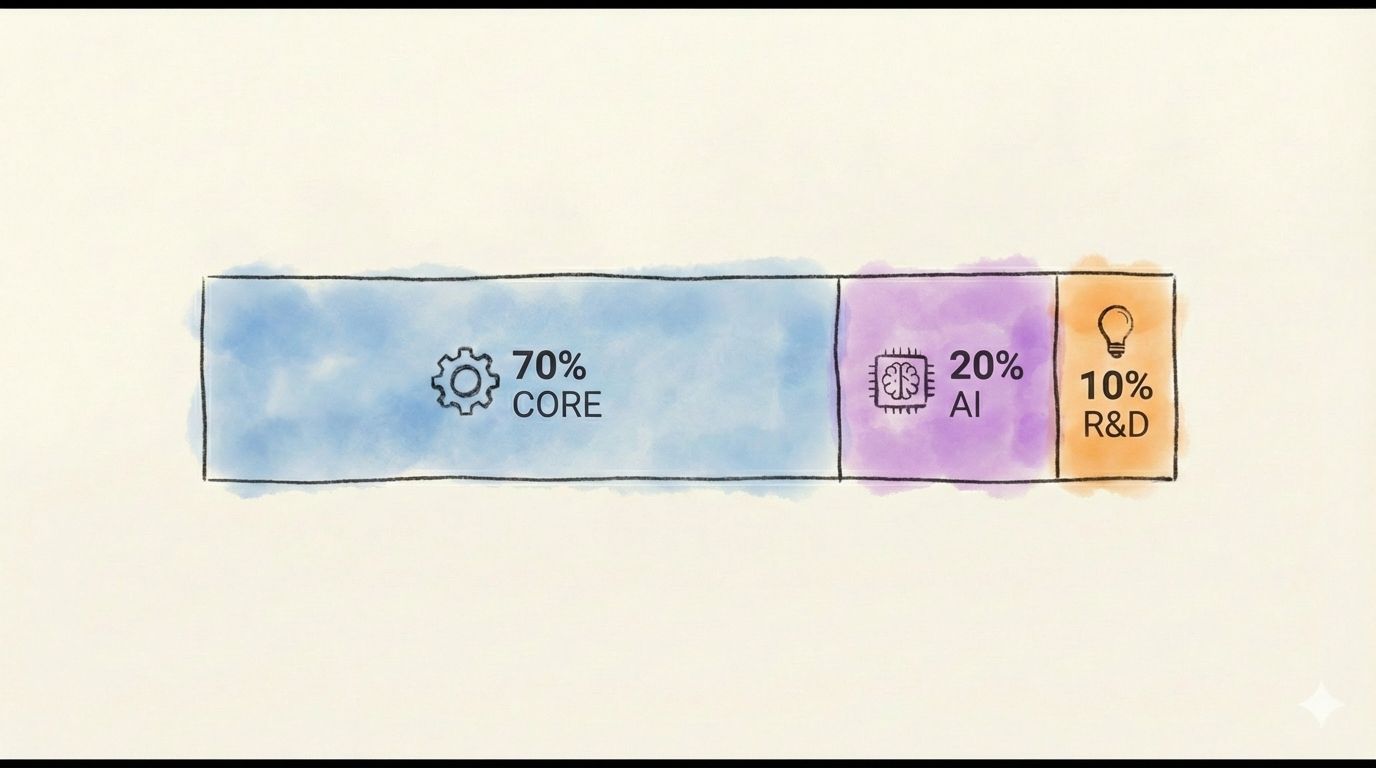
With traditional search volume predicted to drop 25% by 2026, the old "80% SEO / 20% Ads" budget split is dead. The new winning formula is **70/20/10**: 70% on Core Performance, 20% on Generative Engine Optimization (GEO), and 10% on R&D. This guide breaks down exactly where to reallocate your dollars—from cutting "link building" to funding "Digital PR"—to avoid the invisible tax of rising CPCs.
If you simply copy-pasted your 2025 budget into 2026, you have likely already lost money.
We are witnessing two critical shifts that have created an "invisible tax" on traditional marketing spend:
- The Volume Drop: Gartner predicts traditional search engine volume will drop by 25% by 2026 as users shift to AI chatbots and virtual agents.
- The Scarcity Spike: As search inventory shrinks, competition for the remaining blue links heats up. Google Ads CPCs (Cost Per Click) are hitting record highs.
The result is a stagflation nightmare: You are paying 13% more to reach 25% fewer people.
Meanwhile, your customers have moved. They are asking ChatGPT, Perplexity, or Gemini for answers. If your budget is 100% focused on ranking for keywords on a results page, you are effectively invisible to the modern buyer.
To survive this shift, you don't need to abandon SEO, but you do need to re-engineer your budget.
The "Product-Market Fit" Gate
Before allocating a single dollar to this new strategy, there is one hard rule: Do not spend money on SEO if you do not have Product-Market Fit (PMF).
In the Reddit communities we monitor, the consensus is clear: early-stage startups often waste thousands on "Foundational SEO" before they even know who their customer is. If your churn rate is high, your SEO budget should be $0. Spend that money on customer interviews and product development instead.
Similarly, be wary of agencies selling "Guaranteed Top 3 Rankings." In the age of AI answers, "Ranking #1" is often a vanity metric. It is easy to rank #1 for a zero-volume keyword (e.g., "best open-source email API in [Tiny Town]"), but it drives no revenue. The only metric that matters in 2026 is Qualified Referral Traffic from AI citations.
The New Formula: 70/20/10
You cannot abandon traditional channels yet—they still pay the bills today. But you must fund your defense against AI displacement.
Here is the consensus budget split for the AI era:
The 70/20/10 budget split
70% Core Performance (Defense)
- The Goal: Capture existing demand.
- The Spend: Google Ads (High Intent), Technical SEO, Bottom-Funnel Content.
- The Logic: Google isn't dead; it's just mature. Keep the lights on with what works, but optimize it strictly for conversion, not just clicks.
20% GEO & AI Visibility (Offense)
- The Goal: Build "Citation Velocity" (how often AI mentions you).
- The Spend: Digital PR, Proprietary Data Studies, Schema Optimization.
- The Logic: This is where you reallocate your "innovation" budget. You aren't buying links anymore; you are earning citations from the sources AI trusts (like news sites, Reddit, and verified directories).
10% Experimentation (R&D)
- The Goal: Test the future.
- The Spend: Sponsored AI Answers (Perplexity Ads), Influencer/Founder-led content.
- The Logic: Ads on AI platforms have high CPMs ($50+) and are currently best for brand awareness. Test small here to learn the mechanics before the market matures.
The Line Item Swap
To fund that new 20% bucket without asking for more money, you need to cut the "deliverables" that bots ignore and start paying for "assets" that bots cite.
| Cut This (Old World) | Add This (New World) | The "Why" |
|---|---|---|
| Link Building | Digital PR | AI trusts "Entities" (brands mentioned in news/media) far more than random blog links. |
| Generic Blogs | "Data Magnet" Studies | AI ignores generic content it can write itself. It cites original data as a primary source. |
| Rank Tracking | AI Visibility Tracking | Rankings are vanity metrics. You need to know if the AI is recommending you. |
| Broad Match PPC | Intent-Based PMax | Broad match is too expensive. Focus spend strictly on high-intent conversion. |
The "$1,500 Trap" A common mistake is paying agencies $1,000–$1,500/month for "maintenance." In 2026, a small monthly retainer usually gets you automated reports and low-impact work. The Better Move: Save that budget for 3 months ($4,500 total) and spend it all at once on ONE high-impact asset—like a "State of the Industry 2026" report. One authoritative citation from that report is worth 100 cheap backlinks.
The Tactical Fix: The Inverted Pyramid
Finally, your budget won't work if your content is unreadable to machines. To rank in AI overviews, you must update your writing style to the Inverted Pyramid:
- First 50 Words: State the direct answer (The "Who," "What," "Price," or "Verdict").
- The Body: Follow with details, context, and nuance.
AI bots need to "snack" on your data. If they have to dig through 500 words of fluff to find the answer, they will skip you and cite the competitor who answered immediately.
The Missing Piece: Don't Buy a Dashboard, Buy an Engine
Allocating 20% of your budget to a new channel is risky if you can't prove the return. You cannot afford for GEO to be a "black box," and you certainly can't afford to pay for software that just sits there.
Most "AI Visibility" tools are passive dashboards. They show you a pretty chart of your visibility dropping, but they don't tell you how to fix it.
Beonai is different. It is an Action Engine.
We make the 20% budget work harder by combining enterprise-grade measurement with automated execution:
1. Measure the Impact (The CFO's Favorite Part)
- Multi-LLM Visibility: Track your Visibility Score across ChatGPT, Gemini, and Perplexity in real-time.
- Share of Voice (SOV): Know exactly how often AI recommends you vs. your competitors.
- Sentiment Analysis: Fix reputation issues before they spread by tracking positive vs. negative brand descriptors.
2. Execute the Strategy (The Marketer's Favorite Part)
- Actionable Opportunities: Receive specific, weekly tasks to improve your citation velocity. No guessing.
- Content-Gen Workflows: Use our AI-assisted tools to build the exact "Data Magnet" blogs and reports that LLMs love to cite.
- Conversation Tracking: Identify and engage in the Reddit threads and forums where your brand is being discussed right now.
You are moving your money to the future. Make sure you have the tools to win there.
Common questions
Should I completely stop investing in traditional SEO?
No. The 70/20/10 formula keeps 70% in core performance (Google Ads, technical SEO) because it still drives revenue today. The shift is about rebalancing, not abandoning proven channels.
What if my startup doesn't have Product-Market Fit yet?
Don't spend on SEO or GEO until you have PMF. If your churn rate is high, allocate that budget to customer interviews and product development instead. Marketing can't fix a product nobody wants.
How do I measure ROI on the 20% GEO budget?
Track 'Qualified Referral Traffic' from AI citations. Monitor chat.openai.com in Google Analytics, measure Share of Voice (how often AI recommends you vs competitors), and track conversion rates from AI-referred traffic (typically 4.4x higher than traditional search).
What's the difference between link building and Digital PR?
Link building focuses on getting backlinks from any site for SEO rankings. Digital PR earns mentions in authoritative news sources, podcasts, and media that AI trusts as credible entities. One news citation is worth more than 100 random blog links for AI visibility.
Why only 10% on R&D experimentation?
AI ad platforms like Perplexity have high CPMs ($50+) and are still in early stages. The 10% lets you test and learn the mechanics without betting the farm. As the channel matures and costs normalize, you can increase allocation.
Can small businesses afford to implement this budget split?
Yes. Instead of paying $1,500/month for maintenance, save for 3 months ($4,500) and invest in one high-impact asset like an original research report. One authoritative citation from that report delivers more value than months of low-impact retainer work.